
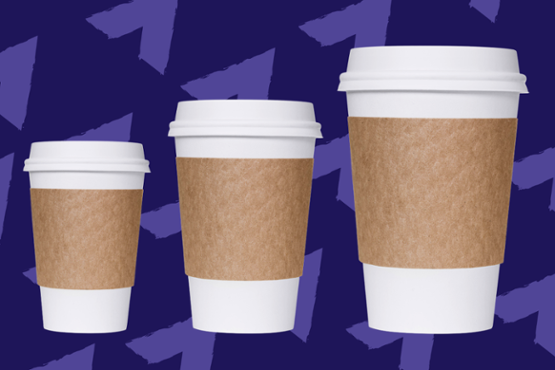
The balance of what and how much we eat are important parts of achieving a healthy diet. Over recent year’s food and drink portion sizes have increased. From the things we buy in a supermarket to the meals we are given in cafes and restaurants. This has led to us all getting used to bigger portions, larger plates, and this being the normal size to eat. Because of this, many of us find it hard to recognise what portion sizes are right for us.
Eating bigger portions can mean you may struggle more with your weight if you eat more than your body needs. If portion sizes are something you struggle with, there are things you can do to help.
Portion size guide
The British Heart Foundation (BHF) suggests how many daily portions we need for each food group if we want to lose weight. Think about what you eat during the day and the portions you have. Is it similar, or do you think you might eat more than this? Look at the balance of the food groups too, and the recommended daily portions for each group.
Daily portions guide
| Food group | Daily portions (women) | Daily portions (men) |
|---|---|---|
| Fruit and vegetables | 5 or more | 5 or more |
| Bread, rice, potatoes, pasta and other starchy foods | 7 | 8 |
| Milk and dairy foods | 3 | 3 |
| Meat, fish, eggs beans and other non-dairy sources of protein | 2 | 3 |
| Spreading fats and oils | 1 | 2 |
Credit: BHF Portion Size Guide
This visual hand guide will give you an idea of what these daily portions actually look like and could help you compare what you usually eat with these examples. Does this look similar to your portions sizes, or do you think you have more than this? Could you make a change to move towards these examples?
Visual portions guide
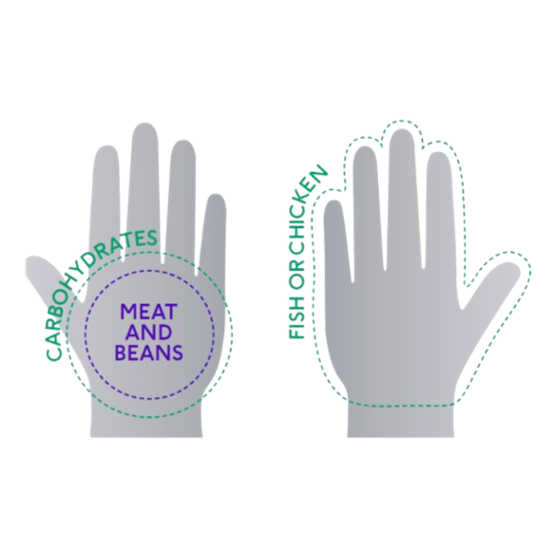
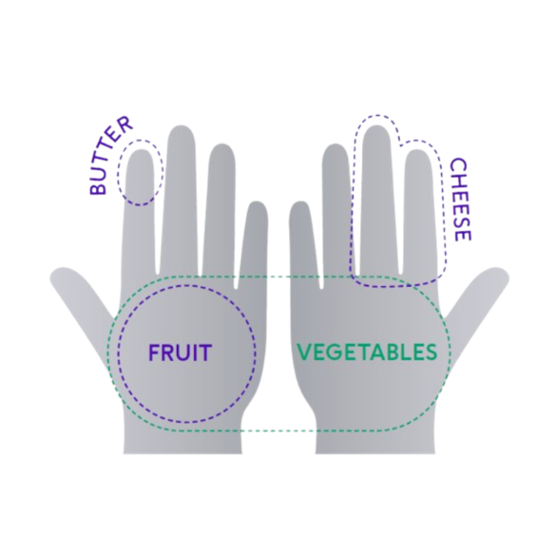
Credit: BHF Portion Size Guide
These portion size tools are a guide, and will vary depending on how active you are, your age and your gender. Over time and with practice, you will be able to recognise what portion sizes are appropriate for you whilst being able to recognise your hunger and fullness signals to guide you.
Practical tips
You can do a few quick and practical things to reduce your portions sizes too. You might find some of these ideas helpful:
- Use smaller plates and glasses at home.
- Think about the number of people eating and measure your food before cooking.
- Store leftovers in the fridge for the next day, or freeze them for a later date.
- Go for smaller sizes when ordering food and drink outside of the home, when you can.
- Talk to family and friends about your goals to help when eating and drinking at other people’s homes.
- Check the labels on prepared foods for the recommended portion sizes; sometimes this is a much smaller portion than the whole product.
Make a note of any changes you think you could make to your portion sizes and set yourself a portion size goal.
A lot of the food and drink we eat is consumed at home. As a result, the food and drink we have available at home can greatly influence our food choices and the overall balance of our diet.
What you eat and drink at home
There are no good or bad foods or meals. The key is to aim for balance and variety so that your body gets the range of nutrients it needs with the food you find satisfying, interesting and enjoyable too.
Planning your meals and food shopping will help make sure what you eat and drink at home is good for you whilst fitting with your routine, preferences and the facilities you have. Our shopping and meal planning pages can help if you would like more support to get started.
Cooking meals at home can be a great way to manage the types and range of foods you eat and make meals go further within your budget. If you want to make some small, simple changes to the meals you cook at home, you may also find the making everyday meals healthier page helpful.
How much you eat at home is just as important as what you eat. We can often snack more than we realise when food is easy to access at home. Think about the snacks you have at home, are the healthier snacks just as easy to reach as the less healthy snacks? We may also eat bigger portions than we need when we cook and serve up food at home. If you struggle with getting the right portions for you, our portion sizes page can help.
How and when you eat and drink at home
Food is more than just eating for your body. Meals can be an enjoyable social time too. If you live with family and friends, sit and eat together around a table when you can. This can make meals their own occasion, where you can slow down, notice and enjoy what you are eating, and spend time together.
Sitting at a table to eat when you can is a great habit to start if you don’t already. We are less likely to be distracted, which can help us be more aware of what and how much we eat. Avoiding distractions whilst eating at home is important as sometimes we can eat more than we realise when distracted by other things.
Establishing an eating routine that suits you can help with eating regularly and healthier snacking. Eating regularly and not skipping meals may help you to be more aware of your body’s hunger and full signals.
Which of the following areas could help improve what you eat and drink at home?
Take a look at the page for further support:
Join the Community
Sign-up to our newsletter to find get inspired with ways to keep your journey moving.
Learn more and Sign-up