


Never too late
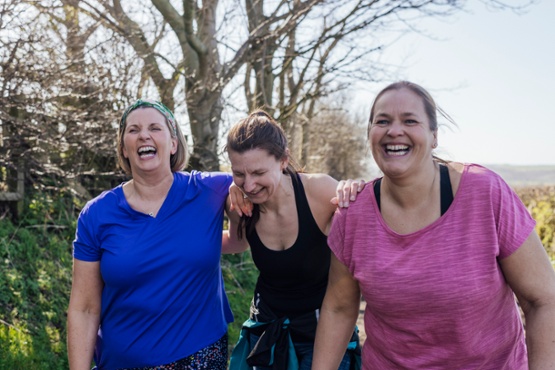
For most people, it’s never too late in life to start being more physically active, whether that’s deciding to take the stairs instead of a lift or joining a friend at a local exercise class. It’s important though if you are currently inactive to build up the amount and intensity of the physical activity over time. This gives your body time to adjust in a safe and sensible way. Whilst any amount of activity will be beneficial, some people like to start off with 10-minute bouts of activity and build up from there.
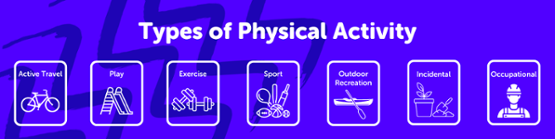
Have a think about how you could build more physical activity into your day – and remember it doesn’t always have to be a planned and structured choice like sports or exercise classes. You could build activity into your day by:
- Walking to and from school with your children or grandchildren.
- Carrying your shopping home.
- Taking the stairs as often as possible.
- Doing some gardening.
- Moving around during advert breaks on TV.
Try this short quiz to help find out what type of activity best suits you.
Multiple benefits
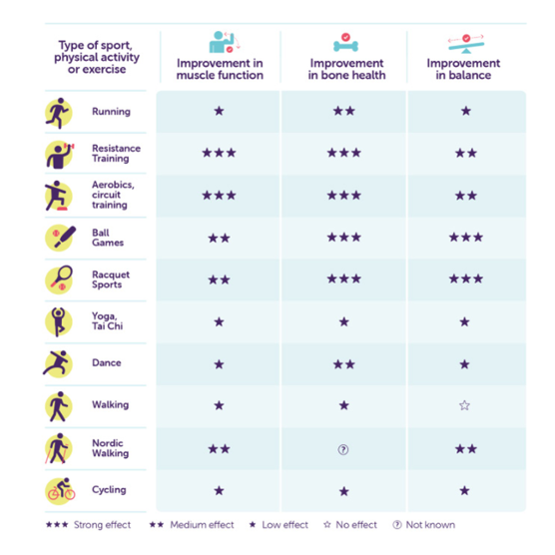
Whilst all types of physical activity are beneficial, some types offer greater benefits for different things.
For older adults, activities that improve strength, balance and flexibility are really important. These types of activity such as resistance training can help maintain good balance, reduce the risk of falls, boost confidence and protect your mental health.
For good all-round health, try to be physically active every day.
Any activity is better than none, and more is better still.
Physical activity and you
Being physically active offers a huge range of mental and physical benefits. These include boosts to your general wellbeing, reducing the risk of over 20 conditions and diseases, helping maintain or achieve a healthy weight and enhancing many social aspects of your life.
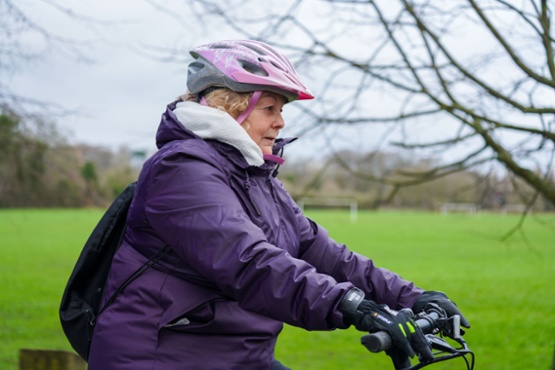
Physical activity isn’t just about playing sports or going to the gym. It can be things like gardening, walking to the shops, or going on a bike ride as well.
For many of us though, we are the first generation that needs to make a conscious decision to build physical activity into our daily lives. Fewer of us have manual jobs. Technology and labour-saving devices dominate at home and at work, the two places where we spend most of our time. Societal changes have unfortunately designed physical activity out of much of our lives.
Current guidelines
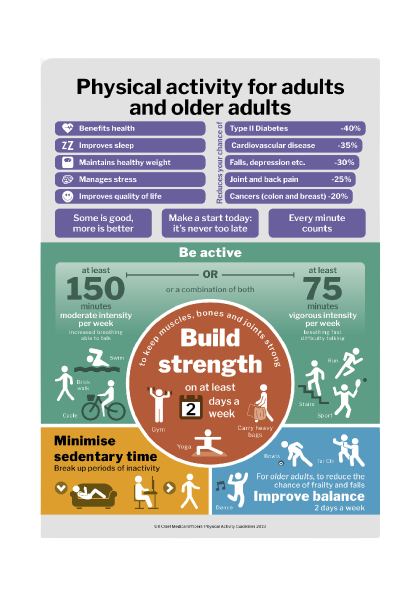
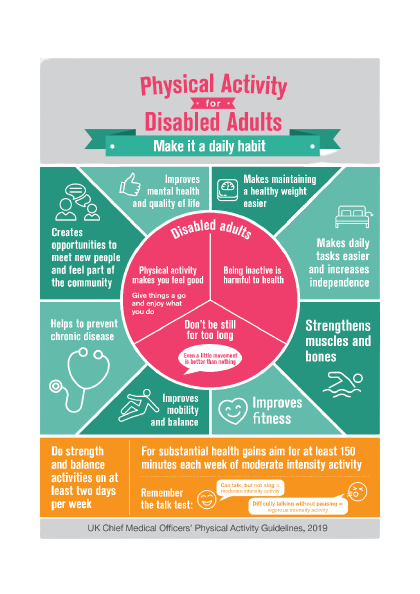
Credit: GOV.UK
It’s important to remember that whilst the guidelines might be there as a personal goal or target, any amount of physical activity at any intensity will be beneficial for you. In general though, the more time spent being physically active, the greater the health benefits.
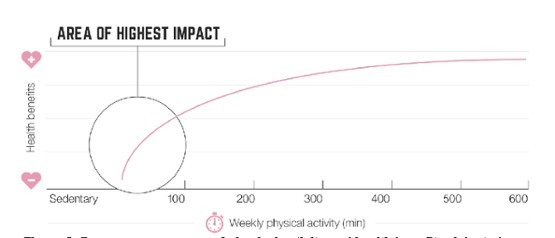
Being sedentary
Sitting, lying or reclining during waking hours for long periods of time is harmful even for people who are reasonably active for other parts of the day. It is important to break up long periods of being still as often as you can, by at least light physical activity, like stretching for a couple of minutes.
Top tips
Here are some suggested tips:
- Do what you enjoy but always be willing to try new things.
- Try to walk or cycle for shorter journeys.
- Track your progress, whether that’s the number of steps or how many exercise classes you have attended.
Move more and more often
Move well
Regular physical activity can help prevent and manage over 20 chronic conditions and diseases, more than any other single intervention. Even in later life, it can help treat and offset the symptoms of a range of chronic conditions (e.g. depression, CVD, Parkinson’s disease).
For people already with a chronic condition or disease, being more physically active will offer a wide range of mental and physical benefits and in many circumstances help treat the underlying condition(s) or disease(s). If you currently have a chronic condition, it is really important that you always check with a healthcare professional before starting any planned change to your daily or weekly amount of physical activity.
For more information on how to get active whilst living with a health condition – check out the We Are Undefeatable website.
If physical activity were a drug, we would refer to it as a miracle cure, due to the great many illnesses it can prevent and help treat.
Exercise on referral
The National Exercise Referral Scheme (NERS) provides access to tailored and supervised exercise for those aged 16+, who are inactive and at risk of, or currently experiencing a long-term or chronic health condition.
Individuals can be referred by health professionals to a local NERS scheme and will receive an initial assessment, a 4-week review and a suitably graded exercise programme for 16 weeks. At the end of the programme, participants are encouraged to progress to a variety of opportunities to be physically active and are signposted to various programmes within local communities.
For more information on the Wales National Exercise Referral Scheme, including finding out if you are eligible to access the service, please click here.

Make a start today, every minute counts!
Join the Community
Sign-up to our newsletter to find get inspired with ways to keep your journey moving.
Learn more and Sign-up